A Great Drone Isn’t Enough: Why Production Readiness Is the Next Defense Advantage
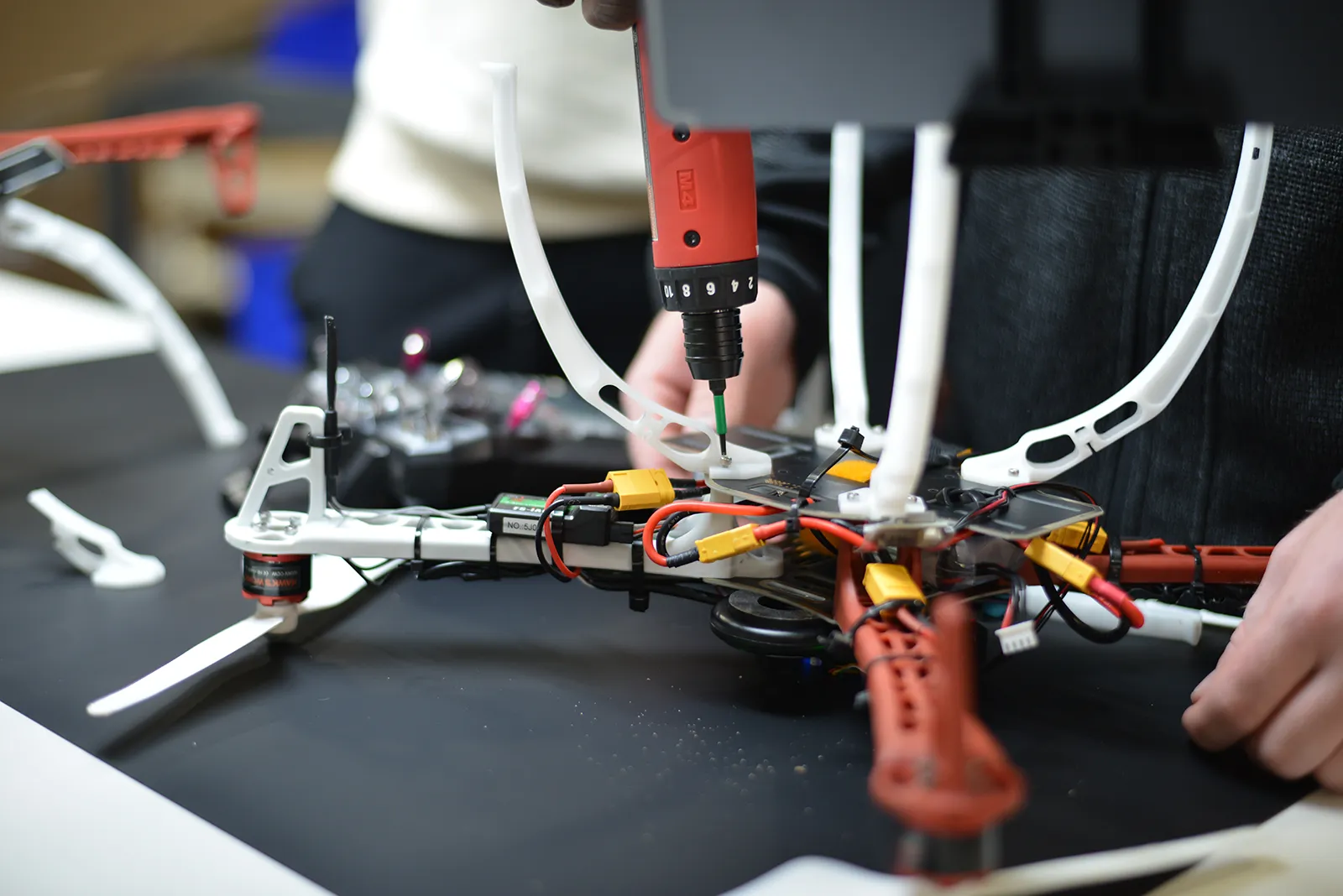
A drone can outperform every expectation in testing—and still fail its mission before it ever leaves the ground.
Not because the technology fails.
Manufacturing does.
Manufacturing Readiness Requires Adaptability
In tip-of-the-spear industries like autonomous drones, demand rarely arrives in a predictable form. A new contract, evolving mission requirement, design change, or supply disruption can quickly alter what must be built, how it must be built, and how quickly it must be delivered.
Manufacturers need robust production systems that can adapt without sacrificing quality, consistency, or speed.
History has repeatedly shown that battlefield advantage depends on more than the technology itself. It depends on whether that technology can be produced, supplied, sustained, and improved at the speed of the mission.
That is the larger message behind the U.S. Drone Dominance Program. Technical performance remains essential, but it is no longer the only measure of readiness. The companies positioned to succeed will be those capable of turning innovation into repeatable, compliant production—and continuing to improve the technology while they do it.
For drone manufacturers, production is no longer what happens after innovation.
Production has become part of the innovation strategy.
The Next Competitive Test Is the Ability to Deliver
In its article, “Drone Dominance: What the Shortlist Reveals About the Future of Defense Procurement,” ePropelled identifies an important shift: defense organizations are evaluating not only which systems perform, but which companies can manufacture, deliver, and sustain those systems at scale.
Published evaluation criteria for the Drone Dominance Program support that conclusion. During the Drone Dominance Gauntlet—a competitive evaluation designed to test participating drone systems and the companies behind them—manufacturers were scored on production and supply-chain capabilities alongside system performance and military operator evaluations.
Official program documents also emphasize on-time delivery, compliant systems, and a path from prototype activity to production.
The program is not simply asking which drone performs best. It is asking which companies can turn performance into dependable capability.
A successful demonstration may prove that a platform works. It does not prove that the manufacturer can respond when an order grows, a component becomes unavailable, the design changes, or an emerging threat demands rapid iteration.
In defense, those are not secondary operational concerns. They can determine whether a promising system becomes a capability that is available when and where it is needed.
The Manufacturer’s Real Challenge: Build More Without Innovating Less
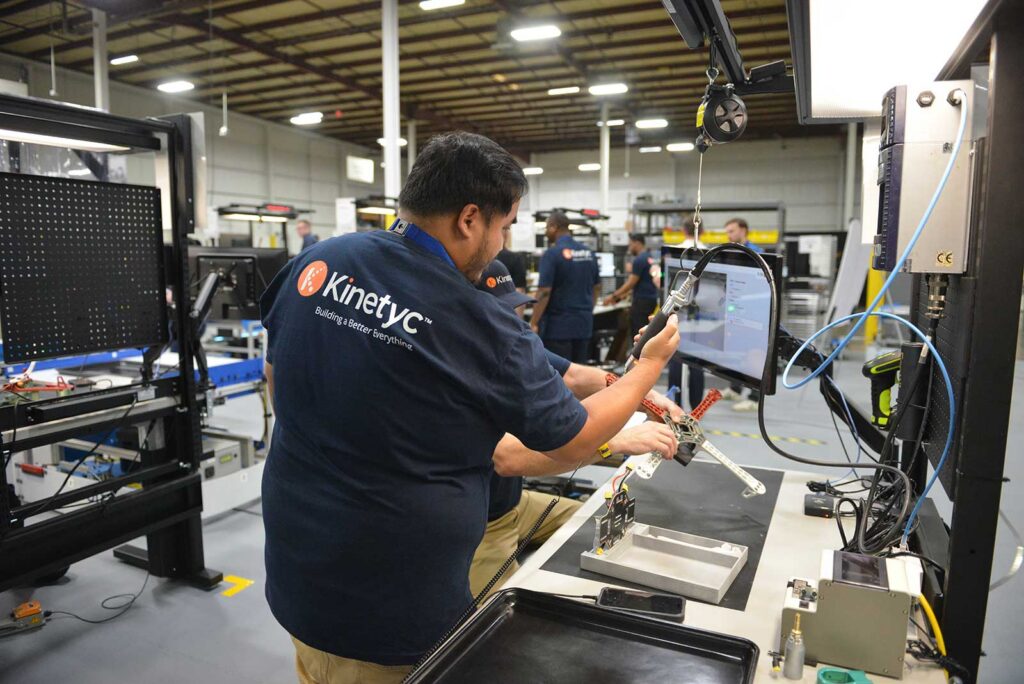
As a drone innovator, you have spent years developing your platform, solving technical problems, and proving what the system can do. When the opportunity finally arrives, fulfilling it should not force your team to stop advancing the technology.
But drone technology does not stand still. Platforms, countermeasures, mission requirements, and operating environments continue to evolve.
Manufacturers must evolve with them.
When demand increases, however, technical teams risk being pulled away from that mission. Engineers who should be improving the platform may instead find themselves sourcing components, resolving production problems, managing suppliers, documenting processes, and preventing quality escapes.
The company may gain production volume but lose innovation speed.
That creates a dangerous tradeoff: build today’s system—or develop tomorrow’s.
Drone manufacturers should not have to choose.
The right contract manufacturing partner can help remove that tradeoff. By adding production capacity, disciplined processes, supply-chain coordination, and traceable quality systems, a manufacturing partner allows the product company to stay focused on advancing the technology.
The result is not simply more units. It is a more agile operating model: one team focused on evolving the platform while another builds it consistently and scales with demand.
When the Contract Arrives, Capacity Cannot Be a Future Promise
An inability to scale is more than a growing pain. It is a business liability.
When a significant opportunity arrives, the manufacturer may suddenly need to:
- Increase output without sacrificing quality
- Establish repeatable assembly processes and digital work instructions
- Maintain configuration control as designs evolve
- Strengthen sourcing and component availability
- Support traceability and applicable compliance requirements
- Deliver consistently against an accelerated schedule
Trying to develop that infrastructure after the contract lands places the entire opportunity at risk.
Building a factory requires capital, equipment, systems, people, supplier relationships, and time. None of those can be created instantly.
Meanwhile, competitors that prepared earlier are already positioned to execute.
The most impressive prototype may earn attention, but production readiness is what allows it to become a dependable, scalable capability. With a credible path to production, drone innovators are better prepared to pursue opportunities, respond as requirements change, and deliver when called upon.
FLEXembly™: A Clear Path from Proven Technology to Dependable Delivery
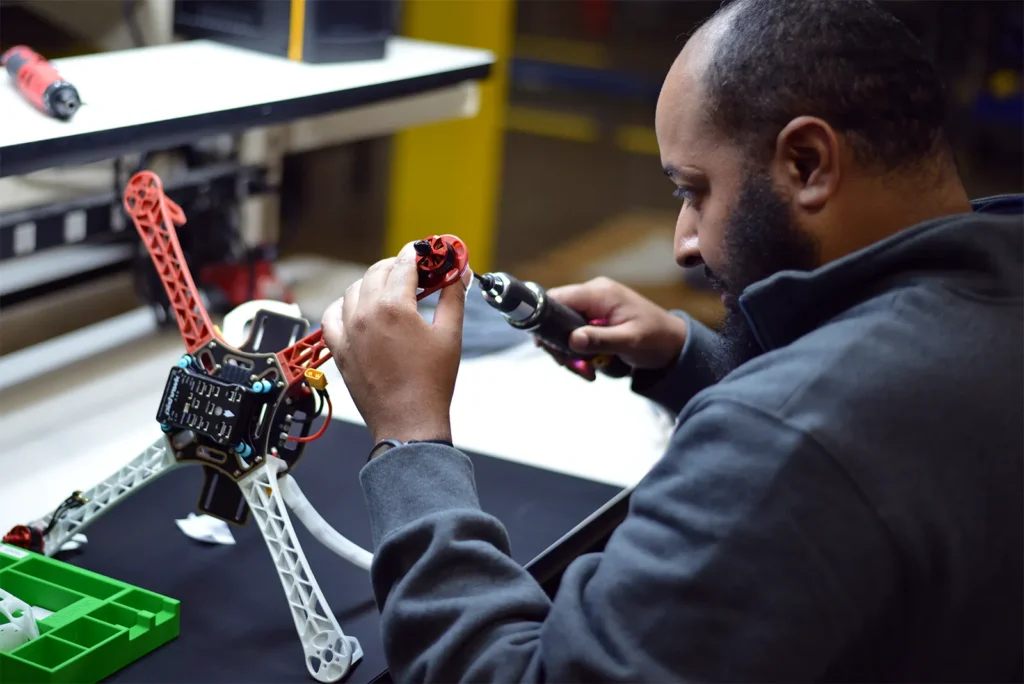
Kinetyc developed FLEXembly for this exact gap: the moment when a promising product must become a repeatable manufacturing program—without pulling the team behind it away from innovation.
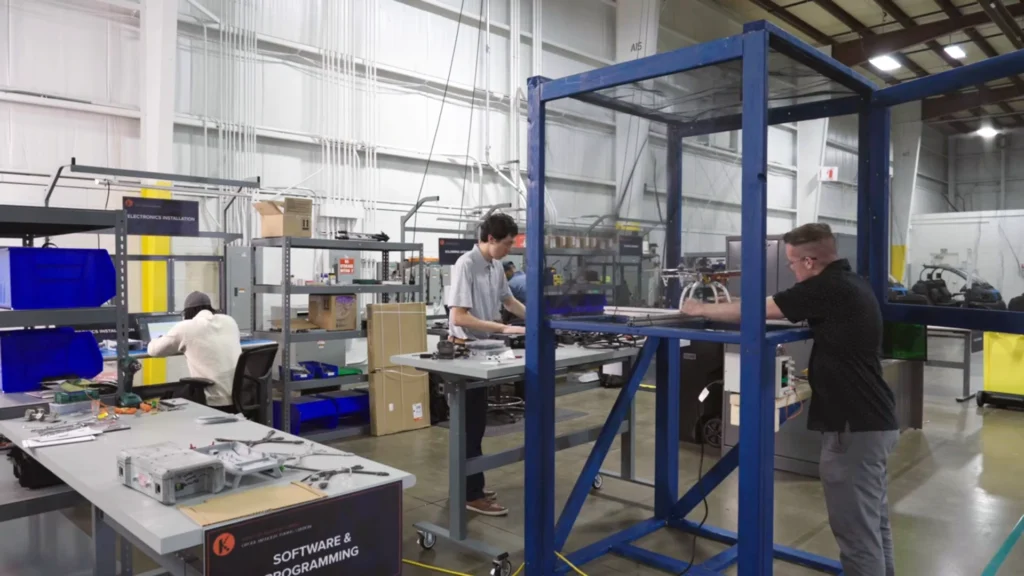
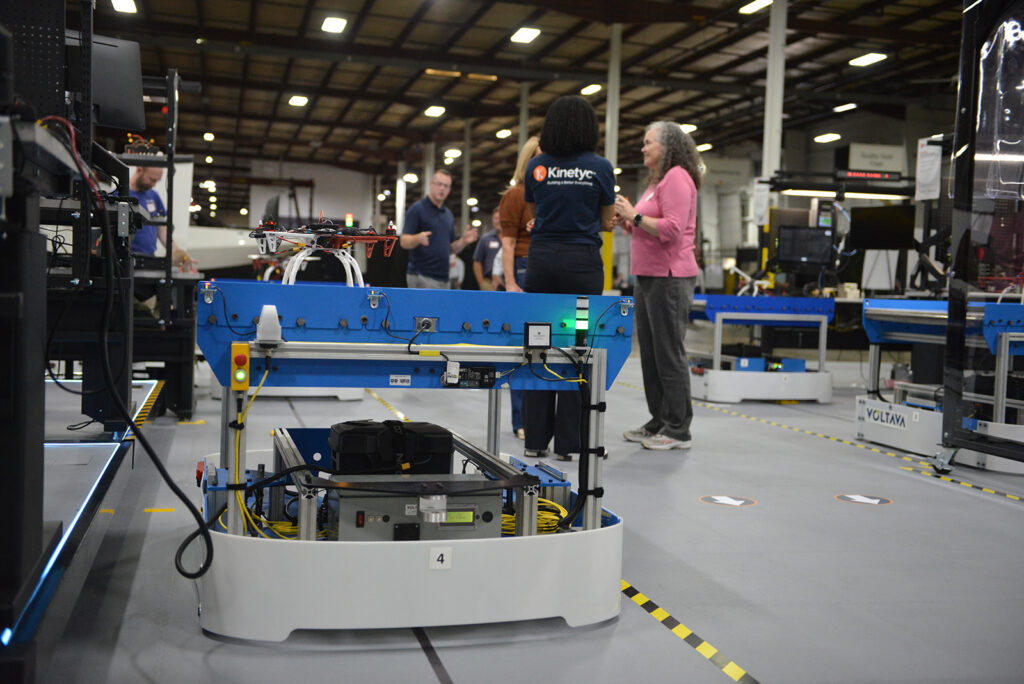
FLEXembly is an adaptive manufacturing system designed to scale and change alongside a manufacturer’s production needs. Its modular assembly cells, line-balanced workflows, component and tooling kitting, manufacturing execution systems, and traceable processes help companies move from prototype and pilot builds into repeatable production—without building an entire factory of their own.
The process follows a practical path:
1. Prepare
Establish production-ready processes, tooling, work instructions, sourcing strategies, and quality controls before demand peaks. Early preparation gives customers greater confidence that a credible manufacturing plan is already in place.
2. Scale
Add adaptable production capacity as volume grows. FLEXembly can expand with demand and accommodate product changes without forcing the manufacturer into a rigid, oversized production model.
3. Deliver
Support consistent builds through configuration control, traceability, and disciplined execution—while the manufacturer’s team remains focused on its customers, its technology, and the next iteration.
Deliver Today. Keep Building What’s Next.
Modern defense programs are sending a clear signal: technological readiness and manufacturing readiness are becoming inseparable.
Drone manufacturers should not wait until a major order exposes the gap between what they can build and what the opportunity requires.
By preparing the manufacturing process earlier, companies can protect their ability to innovate, respond faster as requirements evolve, and approach new opportunities with a confident answer to the question that follows every successful demonstration:
How quickly can you deliver?
Kinetyc helps autonomous-systems companies establish scalable manufacturing processes designed to move as quickly as their technology—so they can deliver what is needed today without losing focus on what the mission will demand tomorrow.