How Kinetyc Uses Augmented Reality to Simplify Complex Assembly
When Complexity Slows Everything Down
Manufacturing continues to grow more complex. Assemblies involve more components, quality expectations are higher, and experienced labor is increasingly difficult to find.
For many manufacturers, this results in:
Traditional tools—paper instructions, PDFs, and static screens—weren’t designed for this level of complexity. As a result, mistakes increase and productivity suffers. For companies building low-volume, high-complexity products, even small errors can lead to costly rework, missed deadlines, or quality escapes.
A Smarter Way Forward
At Kinetyc, quality and efficiency are non-negotiable. To meet today’s challenges, we’re leveraging Augmented Reality (AR) to simplify complex assembly, reduce errors, and give teams clear, real-time guidance where the work actually happens.
The objective is simple: help people do complex work correctly the first time. This approach supports Kinetyc’s broader mission—reducing risk for customers as programs move from early builds to repeatable production.
Why Augmented Reality?
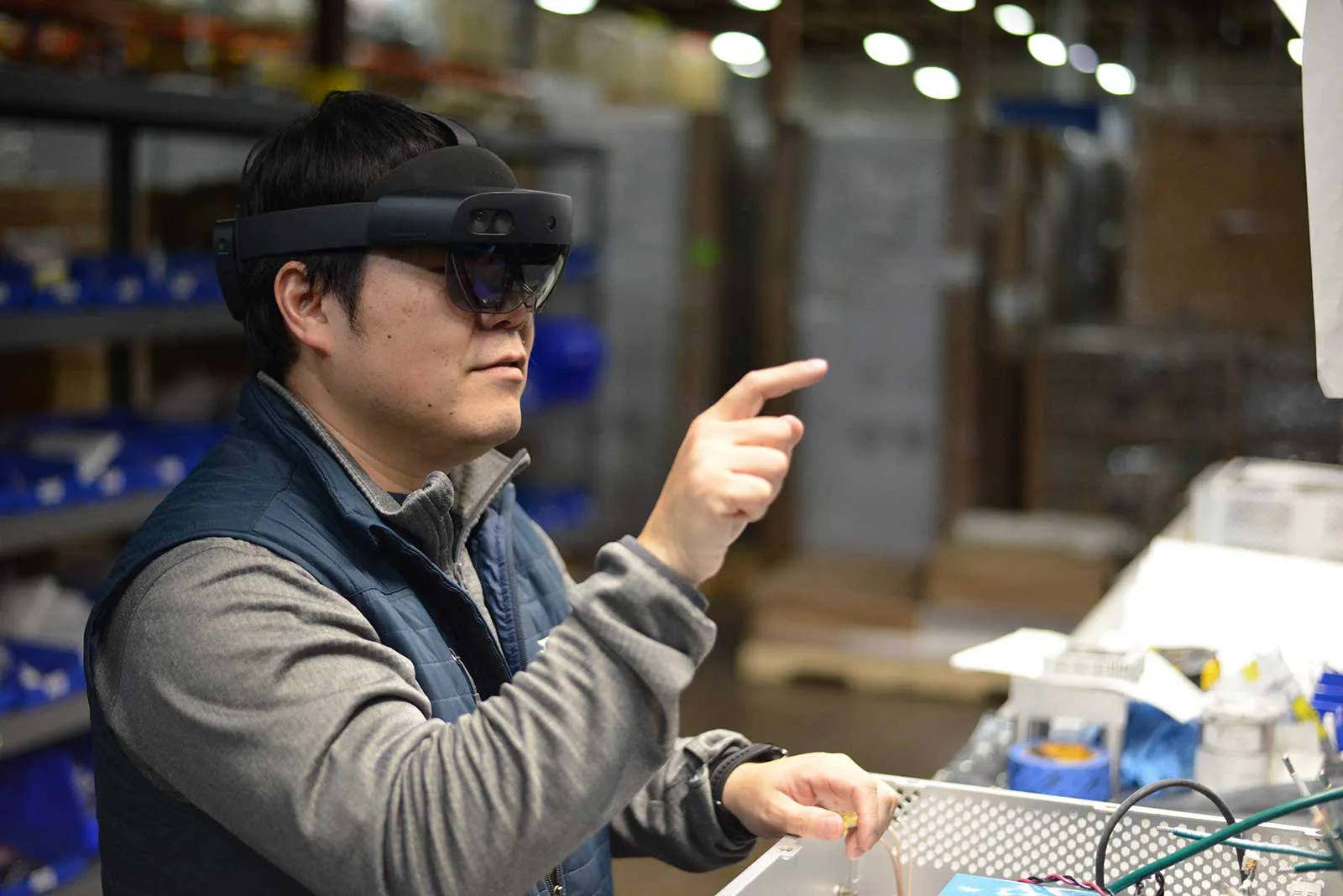
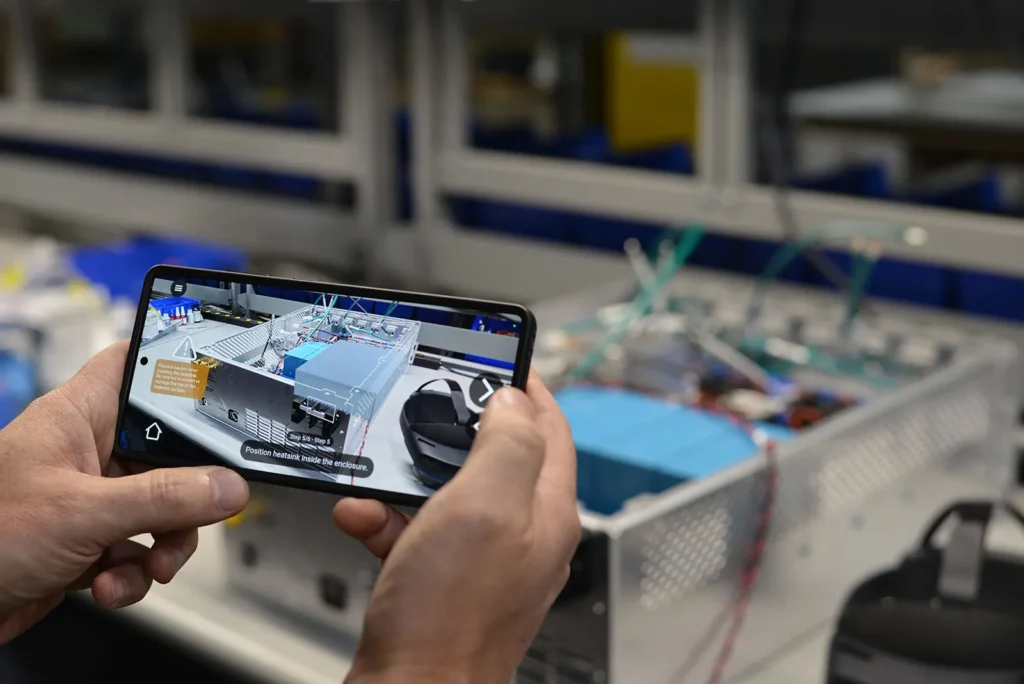
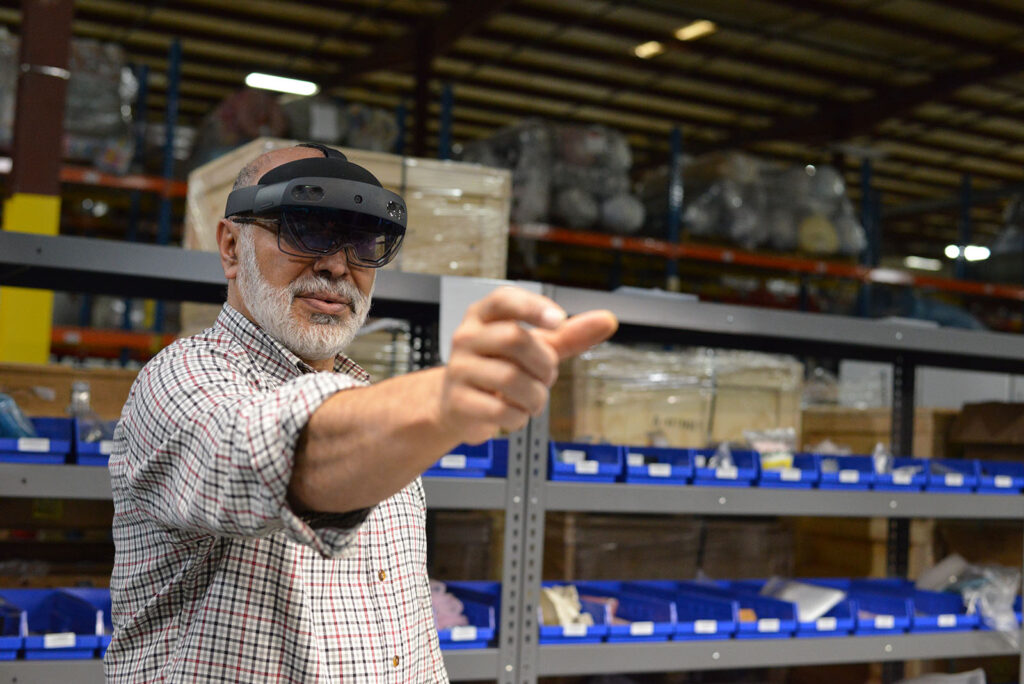
Kinetyc uses Microsoft HoloLens and mobile-based AR tools to place digital work instructions directly into a technician’s field of view. Instead of stepping away from the build to consult manuals or screens, operators receive:
By presenting information in 3D space, AR eliminates interpretation and bridges the gap between training and execution. Depending on the application, AR guidance can be delivered through a headset or a standard smartphone—allowing teams to adopt the technology quickly using devices they already have.
From Instructions to Guided Assembly
AR transforms assembly from a static process into a guided experience. New and experienced technicians alike can follow precise, visual workflows that mirror how products are built on the floor.
“We’re using HoloLens as both an assembly guide and a training tool,” says Marcus Lott, Project Lead at Kinetyc. “You can put the headset on a new employee and walk them through every step, exactly as the product is built at the station.”
This approach reduces variation, improves consistency, and shortens the learning curve without slowing production. Teams gain confidence faster, and customers benefit from more predictable outcomes.
Training That Works Where the Work Happens
Traditional training often pulls people away from the task. AR keeps learning embedded in the process, allowing technicians to build confidence while doing real work.
Visual guidance reduces back-and-forth between instructions and parts, helping operators stay focused and productive. The result is faster onboarding, fewer mistakes, and smoother handoffs between training and full production. For customers, this means less disruption during ramp-up and fewer surprises as volumes increase.
Accuracy and Real-Time Support
AR also improves accuracy by guiding technicians to the correct parts and actions at each step. Visual cues remove ambiguity and help prevent errors before they occur.
When issues arise, AR enables real-time remote support. Technicians can connect with experts who see exactly what they see and provide guidance instantly—reducing downtime and keeping operations moving. This capability is especially valuable when engineering, quality, or supplier expertise isn’t physically on-site.
Designed for Complex Assembly
AR delivers the most value in environments where complexity, precision, and limited access are factors. Electrical systems, wiring, and confined spaces benefit especially from hands-free, in-context guidance that traditional screens can’t provide.
Rather than replacing every process, Kinetyc applies AR strategically—where it makes the biggest impact. It’s not about using advanced tools everywhere—it’s about using the right tools where they matter most.
Scalable for the Future
Once AR workflows are created, they can be reused and adapted across products, stations, and programs. This makes the technology highly scalable while remaining flexible enough to support changing production needs.
“You can learn something in a classroom, but you learn faster when you’re immersed in it,” Marcus explains. “AR creates that same immersion, surrounding people with the process instead of asking them to translate instructions.”
As programs evolve, AR helps maintain consistency without restarting training from scratch.
Building Confidence Through Innovation
Augmented Reality is one part of Kinetyc’s broader commitment to innovation, quality, and operational excellence. By investing in tools that make complex work easier to execute, we help our customers reduce risk, improve efficiency, and build with confidence.
The technology stays in the background—the results are what matter.
Ready to Simplify Complex Assembly?
If your program involves complex assemblies, tight tolerances, or rapid onboarding requirements, Kinetyc’s AR-enabled workflows can help reduce risk before it becomes cost.